
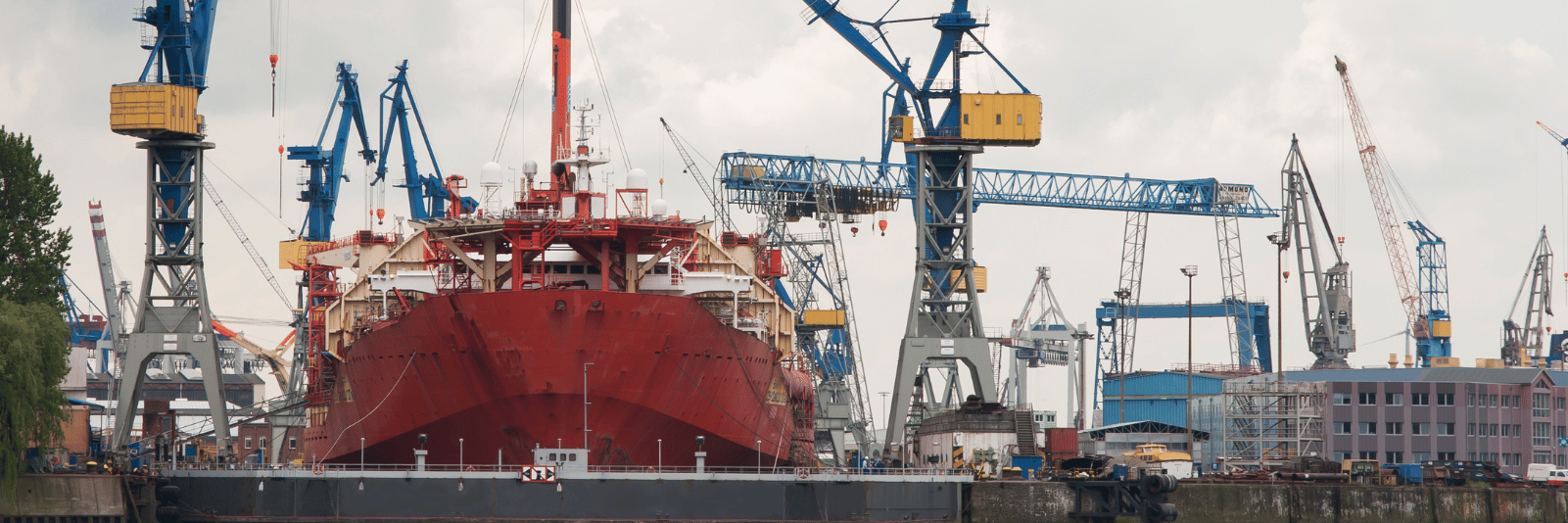
Ship maintenance, repair, and overhaul (MRO) represents one of the most complex, high-stakes undertakings in the maritime industry. Every vessel that enters dry dock demands precision, coordination, and meticulous cost management. Unlike new construction, where materials dominate budgets, ship MRO projects are driven by multiple converging factors, skilled labor availability, hidden defects, regulatory compliance, supply chain disruptions, and tight scheduling constraints. These challenges make accurate estimation and project streamlining critical to profitability.
For maritime contractors and shipyard operators managing complex MRO scopes, the difference between an efficient project and a cost-overrun disaster often comes down to strategy, visibility, and the tools that enable real-time decision-making. This comprehensive guide explores what ship MRO truly entails, the key phases that define these projects, the top cost drivers that impact your margins, and proven strategies to optimize every stage of execution.
What is Ship MRO?
Maintenance, Repair, and Overhaul (MRO) in the maritime context encompasses all technical and administrative activities required to maintain a vessel’s seaworthiness, safety, compliance, and operational efficiency throughout its service life. Ship MRO is fundamentally different from new construction—it addresses the unique challenges of aging vessels, hidden defects, regulatory mandates, and the uncertainty of not knowing the full scope of work until inspection begins.
Key Main Types of Ship MRO Projects
Preventive Maintenance involves scheduled inspections, cleaning, lubrication, and routine component replacements conducted regularly to prevent system failures. This category includes engine checks, ballast system inspections, and routine servicing of auxiliary equipment. Organizations that invest in preventive maintenance reduce the likelihood of catastrophic failures and extend asset lifespan.
Corrective Maintenance addresses faults, damage, or failures that are discovered during operation or inspection. These repairs can range from fixing a failed pump to addressing structural corrosion. The challenge is that corrective maintenance is often unplanned, driving unexpected costs and schedule disruptions.
Dry-docking and Overhaul represent the most comprehensive form of ship MRO. During dry-docking, vessels are removed from water and placed in a dry berth where major structural, mechanical, and systems work occurs. Hull inspection, repainting, propeller servicing, main engine rebuilds, and machinery overhauls all take place during these intensive periods. Dry-docking is periodic, typically occurring every 2.5 to 5 years depending on vessel age, type, and regulatory requirements.
Key Phases of a Ship MRO Project
Understanding the distinct phases of a ship MRO project is essential for planning, resource allocation, and cost control. While every project has unique variables, the typical structure follows these sequential phases:
Phase 1: Planning and Pre-Docking Assessment
This phase begins months before the vessel enters dry dock. Technical teams conduct a comprehensive review of the vessel’s history, class survey records, and operational performance. Engineers identify known maintenance needs based on the ship’s age, prior defects, and regulatory requirements.
A critical part of this phase is the preliminary inspection or walk-through survey by the shipyard and ship management company. This identifies visible defects, corrosion patterns, and anticipated scope items. However, it’s important to note that this survey cannot predict all hidden damage—this is a major source of contingency risk in project estimates.
Key activities:
- Historical data review and performance analysis
- Regulatory compliance checklist preparation
- Preliminary shipyard assessment
- Scheduling coordination (availability of dry berth, seasonal considerations)
- Budget and resource planning
Phase 2: Mobilization and Documentation
Once the vessel is scheduled and the date is set, the shipyard and contractor teams formally mobilize. This phase involves finalizing the Scope of Work (SOW), securing permits, coordinating with regulatory surveyors, and preparing documentation for compliance oversight.
During this phase, the contractor captures the detailed specification of work, secures any long-lead materials, and coordinates with subcontractors for specialized services such as hull blasting, painting, non-destructive testing (NDT), and specialized engine work.
Key activities:
- Final scope definition and SOW documentation
- Permit and regulatory approvals
- Subcontractor sourcing and booking
- Material procurement and long-lead item ordering
- Pre-positioning of equipment and tools
- Crew mobilization and assignment
Phase 3: Project Execution
This is the most intensive and costly phase. The vessel enters dry dock, and work proceeds across multiple work areas simultaneously—hull repairs, machinery overhauls, electrical system upgrades, piping replacements, and specialized systems work all occur in parallel.
This phase is characterized by high complexity: work crews interact with tidal windows, spatial constraints (limited working space in a dry berth), evolving scope as hidden defects are discovered, and the need for real-time coordination across dozens of interdependent tasks.
Key activities:
- Hull inspection, blasting, and repainting
- Main and auxiliary engine overhauls
- Machinery system repairs and replacements
- Piping and valve work
- Electrical system upgrades
- Structural steel repair and replacement
- Specialized trades (welding, machining, rigging)
- Daily progress tracking and change order management
Phase 4: Testing, Inspection and Certification
As work completes, systems undergo rigorous testing and inspection. The vessel’s main engine is tested under load, electrical systems are verified, and safety systems (lifeboats, fire suppression, emergency systems) are certified. Regulatory surveyors conduct formal inspections to ensure compliance with SOLAS, class society rules, and flag state requirements.
Key activities:
- System commissioning and testing
- Regulatory and class society inspections
- Certification and issuance of required documents (Safety Management Certificate, class survey certificates)
- Final punch list completion
- Documentation and record-keeping for compliance
Top Cost Drivers in Ship MRO Projects
Ship MRO budgets are shaped by a diverse set of cost factors, each with a significant impact on profitability. Understanding these drivers allows project managers to identify where cost overruns are most likely and where optimization strategies can yield the greatest returns.
| Cost Category | Description |
| Labor Costs | Skilled Labor (40-60% of total cost) dominates ship MRO budgets. Certified welders, engineers, and machinists command high rates, and premium shipyards, overtime premiums, and geographically dispersed work inflate labor costs further |
| Parts and Materials | Parts and Materials (20-30% of total cost) represent the second largest driver. Marine components—main engines, specialized pumps, electronic systems, and structural steel—are low-volume, high-cost items with lengthy lead times. Supply chain disruptions and material price volatility add significant unpredictability. |
| Subcontracted Services | Subcontracted Services (15-25% of total cost) cover hull blasting, painting, non-destructive testing, engine remanufacturing, and other specialized work outsourced to external vendors. |
| Fixed Berth Rental Costs | Fixed Berth Rental Costs (10-15% of total cost) are the most visible fixed expense. A 60-day dry-docking project in a premium shipyard can incur $250,000 to over $1 million in berth fees alone, making schedule delays extremely costly—every day of delay directly erodes margin. |
| Equipment Rental | Equipment Rental (5-10% of total cost) includes cranes, lifting equipment, and specialized tooling, which scale with project duration. |
| Overhead and Administration | Overhead and Administration (5-10% of total cost) covers project management, planning, quality inspection, and yard overhead—costs often underestimated and prone to overrun. |
| Contingency Cost | Contingency for Hidden Defects (10-20% of total cost) is a critical reserve. Hidden corrosion, structural cracks, and system failures discovered during teardown are nearly inevitable on aging vessels. Older vessels justify 20-25% contingency, while newer ships warrant 10%. |
Top Strategies to Streamline Ship MRO Projects
Given the complexity and cost sensitivity of ship MRO, successful organizations employ integrated strategies to optimize planning, execution, and cost control. Here are the most effective approaches:
Implement a Robust Pre-Docking Assessment and Scoping Process
The front-end investment in comprehensive planning pays dividends throughout execution. Rather than relying on a cursory walkthrough, conduct a detailed pre-docking survey that includes:
- Ultrasonic thickness surveys of the hull to identify corrosion severity before entering dry dock
- Machinery condition assessments using borescope inspections and vibration analysis to predict failure risk
- Structural video inspections of cargo holds and ballast tanks to assess steel condition
- Historical defect analysis to identify patterns of recurring issues
This advanced assessment data informs more accurate contingency planning and reduces the number of surprises discovered during active repair. Organizations that invest in thorough pre-docking surveys consistently achieve tighter cost and schedule performance.
Develop a Detailed Phase-Based Work Breakdown Structure (WBS)
Organize the entire MRO scope into clearly defined phases (as discussed above), and further decompose each phase into discrete work items with clear dependencies, resource requirements, and completion criteria.
A robust WBS enables:
- Precise resource scheduling so that labor, equipment, and materials are available exactly when needed
- Parallel workflow execution where independent tasks proceed simultaneously, reducing idle time
- Accurate progress tracking so that delays are identified and corrected in real-time rather than discovered at project closeout
- Risk visibility so that high-risk or long-lead items are flagged early
A well-structured WBS reduces schedule variance and prevents the common pitfall of critical dependencies blocking progress.
Prioritize Supply Chain and Materials Planning
Material delays are among the top sources of schedule and cost overruns in ship MRO. Implement a disciplined supply chain strategy:
- Identify long-lead items early (engines, specialized valves, electronics) and initiate procurement immediately upon project approval
- Develop backup suppliers and stock alternatives for critical components to mitigate single-source dependencies
- Use vendor consolidation and strategic sourcing to improve lead times and pricing. Research shows that consolidated supplier bases with 2-3 quotes per line item achieve more competitive pricing than fragmented sourcing
- Implement just-in-time (JIT) delivery coordinated with the project schedule so that materials arrive when needed, reducing on-site storage costs
- Track and manage inventory to avoid duplicate orders or overstocking that inflates working capital
Effective supply chain management directly reduces project duration and eliminates costly schedule delays.
Establish Clear Roles, Responsibilities and Communication Protocols
Ship MRO projects involve numerous stakeholders: ship management companies, shipyards, contractors, subcontractors, material suppliers, regulatory surveyors, and classification societies. Unclear communication leads to rework, scope disputes, and delays.
Implement:
- Clear Scope of Work (SOW) documents that define what is included and excluded from contractor responsibility
- Regular progress meetings with defined agendas, action items, and accountability
- Daily stand-ups or progress reports during the execution phase to catch issues before they escalate
- Change order procedures that require documented approval before scope is expanded
- Defined escalation paths for issues that require rapid decision-making (e.g., discovering unexpected structural damage)
Organizations practicing disciplined communication consistently achieve higher schedule reliability and fewer disputes. Clear communication prevents misaligned expectations, reduces rework, and accelerates problem resolution.
Leverage Condition-Based and Predictive Maintenance Insights
Modern maritime maintenance planning increasingly incorporates condition-based and predictive approaches alongside traditional time-based maintenance. This means:
- Using sensor data and historical performance trends to prioritize which components genuinely require replacement versus which can be extended
- Applying risk-based maintenance that considers both the likelihood and consequence of failure to allocate repair resources to highest-impact items
- Capturing lessons from prior vessels of the same class to anticipate common failure modes
This data-driven approach reduces unnecessary work while ensuring that safety-critical systems receive appropriate attention. Risk-based prioritization focuses resources on work that delivers the highest safety and operational benefit.
Implement Real-Time Progress Tracking and Adapting Scheduling
Traditional Gantt charts and static schedules quickly become obsolete when unforeseen repairs are discovered or materials are delayed. Successful MRO operations employ adaptive scheduling with real-time visibility:
- Daily progress capture that tracks actual work completed versus planned
- Real-time schedule updates that identify critical path delays and reprioritize work
- Automated alerts for approaching deadlines, resource conflicts, or material shortages
- Scenario planning for contingencies (e.g., “if the main engine overhaul takes an extra 10 days, where do we reallocate labor?”)
Research shows that integrated planning with real-time execution visibility can reduce project duration. Adaptive scheduling enables rapid response to delays and prevents compounding schedule effects.
Establish Regulatory Compliance as a Core Planning Component
Rather than treating compliance as an afterthought, embed regulatory requirements into the project plan from the start:
- Identify all required surveys and inspections (SOLAS, class society, flag state)
- Schedule surveyor attendance to avoid idle time waiting for inspection appointments
- Budget for required certifications and documentation (e.g., Welder certifications, NDT qualifications)
- Allocate time and resources for waste handling, environmental compliance, and specialized safety measures
- Maintain meticulous documentation throughout execution to facilitate final compliance sign-off
Regulatory delays and rework from non-compliance are expensive. Front-end planning prevents these costs. Integrated compliance planning eliminates surprise hold-ups and reduces the risk of costly rework.
Capture and Reuse Estimating Knowledge from Prior Projects
One of the most valuable, and most overlooked, assets in MRO organizations is institutional knowledge embedded in prior projects. Successful organizations:
- Build libraries of prior estimates organized by vessel class, work scope, and yard capability
- Develop standardized rate cards for labor, materials, and subcontracted services
- Create reusable calculators and templates that capture best-practice estimation logic
- Document lessons learned from completed projects to inform future bid strategies
This knowledge capture prevents the loss of expertise when key estimators retire and ensures consistency across bid team members. Organizations with mature estimation knowledge libraries achieve higher bid accuracy and faster bid turnaround times. Institutional knowledge reduces estimation errors and accelerates proposal delivery.
Invest in Collaborative Estimation and Project Management Tools
Modern MRO contractors benefit from purpose-built project estimation and management platforms that centralize data, enable real-time collaboration, and enforce consistent processes. Purpose-built MRO estimation tools address the shortcomings of spreadsheets and legacy ERP systems:
- Centralized data repositories that eliminate version control issues and data fragmentation
- Multi-user collaboration with permission-based access so that estimators, project managers, subcontractors, and executives all work from current, consistent data
- Variable-based estimation models that handle complex labor roles, rate cards, and material costs
- Real-time visibility into cost, schedule, and resource status
- Integration with historical data so that prior projects inform current estimates
- Support for long-duration, multi-period projects where labor rates and material costs vary by phase
- Automated tracking and alerting for key metrics and exceptions
Organizations using integrated estimation platforms report fewer costly surprises, higher proposal win rates, and better project execution outcomes. Integrated tools eliminate data fragmentation, enable real-time decision-making, and capture institutional knowledge.
Key Benefits of Streamlining MRO Projects
Ship MRO projects represent some of the most complex, high-stakes undertakings in the maritime industry. Success requires a disciplined approach that addresses complexity at every stage: from comprehensive pre-docking assessments that reduce uncertainty, to detailed phase-based planning that optimizes resource allocation, to real-time execution tracking that enables rapid adaptation when surprises occur.
The top cost drivers, skilled labor, parts and materials, equipment rental, subcontracted services, overhead, and fixed berth costs, demand meticulous management. Organizations that master these cost drivers through strategic planning, supply chain optimization, and regulatory integration consistently achieve higher margins, better schedule performance, and stronger competitive positioning.